Copper is one of the earliest metals discovered and utilized by humanity. Due to the excellent electrical and thermal conductivity, corrosion resistance, tensile and fatigue strength, and ease of processing exhibited by copper and its alloys, they are widely employed in modern industrial production. In nature, copper primarily exists in the form of compounds, such as chalcopyrite, bornite, and chalcocite. Currently, copper ranks third—behind only steel and aluminum—in terms of metal consumption; it serves as an indispensable foundational material and a strategic resource for the national economy, public welfare, national defense, and high-tech sectors. It finds extensive application across various fields, including the electrical, mechanical, chemical, and defense industries.

 Applications

The copper ore grinding process is generally categorized into three types: coarse powder processing (0–3 mm), fine powder processing (20–400 mesh), and ultrafine powder processing (400–3250 mesh). The specific production process required may vary based on the material, the desired level of fineness, and the intended application; therefore, a flexible approach is necessary. For further details, please consult our online customer service.
Large chunks of copper ore are crushed by a crusher until they reach a fineness (15mm–50mm) suitable for feeding into a grinding mill.
The crushed copper ore is transported via an elevator to a storage hopper, from which it is fed uniformly and at a controlled rate into the grinding chamber of the mill.
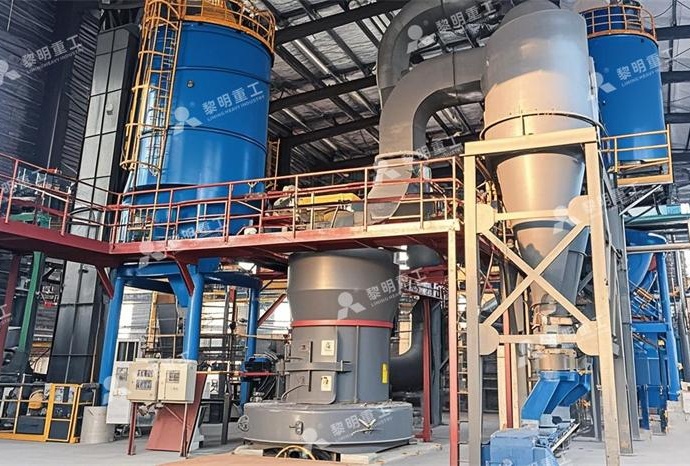
For the production of fine powder, equipment such as the LM Vertical Roller Mill, MTW European-style Mill, or 5X European-style Intelligent Mill is typically used. For ultra-fine powder, the LUM Ultrafine Vertical Mill or MW Ring-Roller Ultrafine Mill is preferred, while for coarse powder, the CM European-style Coarse Powder Mill or a direct-flow centrifugal mill is used.
The ground material is processed through a classifier (powder separator). Particles that do not meet the required fineness are separated and returned to the main mill for further grinding.
Particles that meet the required fineness are carried by an airflow through ducts into a dust collector, where they are separated and gathered. The collected finished powder is then transported from the discharge outlet to a finished-product silo, from where it is either loaded into bulk tanker trucks or processed through an automatic bagging machine.
Required equipment
RELATED CASE
 Request a quotation


Copyright © LIMING HEAVY INDUSTRY CO., LTD. All rights reserved Privacy Policy